A flat tire can happen without warning. One moment you are driving normally, and the next moment you may feel your vehicle pulling to one side, hear a loud tire noise, or notice difficulty controlling your car. When this happens on a busy highway, staying calm and making the right decisions is extremely important.
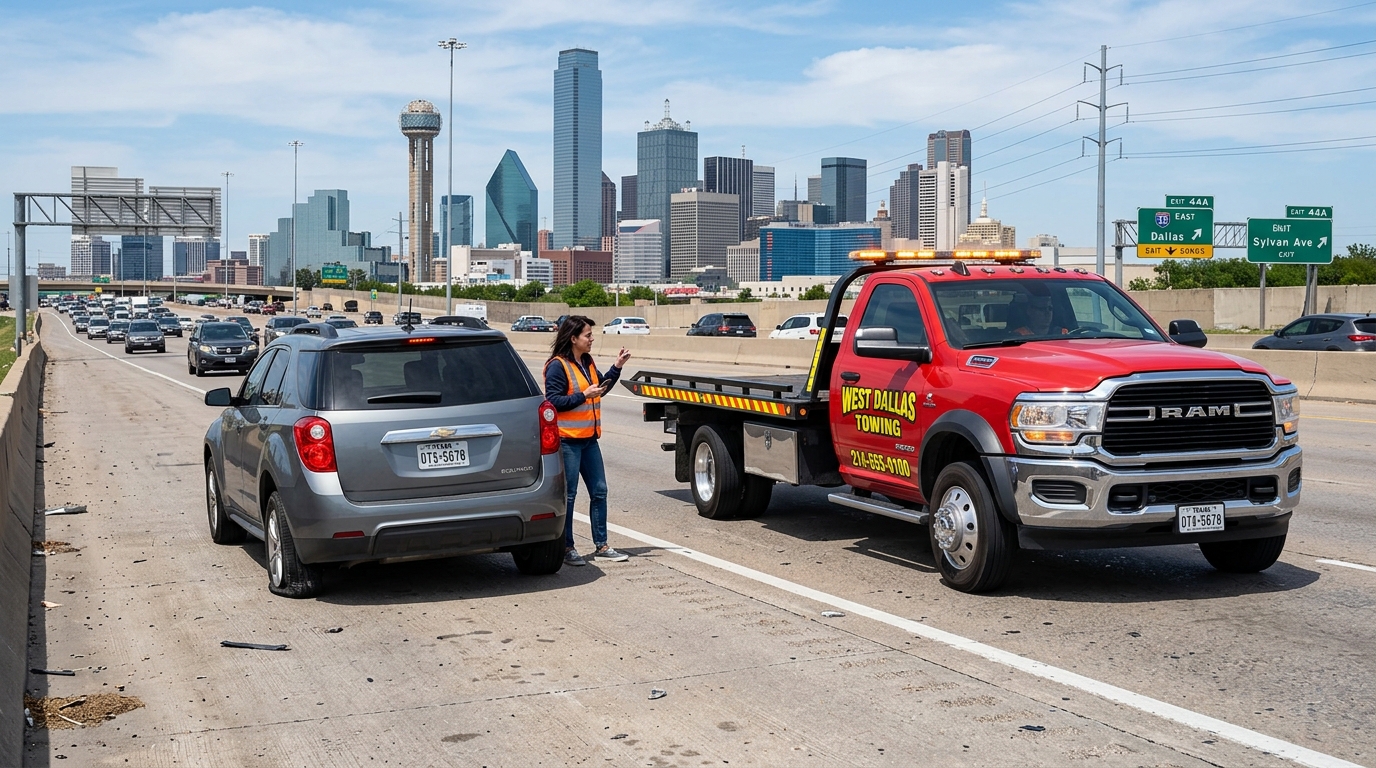
Dallas, Texas, has several busy highways and major roads where drivers experience heavy traffic every day. Roads like Interstate 35, Interstate 635, US-75, and Dallas North Tollway can become dangerous locations for unexpected vehicle problems. Knowing proper flat tire safety steps can help protect you and your passengers while waiting for help.
Whether you experience a slow tire leak or a sudden blowout, understanding what to do next can prevent further damage and reduce safety risks. This guide explains what Dallas drivers should do during a tire emergency and when to contact professional roadside assistance in Dallas TX. At West Dallas Towing, our experienced technicians provide 24/7 emergency roadside tire help throughout Dallas, Irving, and the surrounding DFW metroplex.
Why Flat Tires Are Dangerous on Highways
A flat tire is not only a vehicle problem. It can become a serious safety concern when it happens near fast-moving traffic. Highway tire emergencies are risky because of high-speed vehicles passing nearby, limited shoulder space, poor visibility at night, distracted drivers, and sudden lane changes.
Many drivers make unsafe decisions after getting a flat tire because they immediately focus on repairing the vehicle. However, your first priority should always be protecting yourself and your passengers.
Step 1: Stay Calm and Control Your Vehicle
The first few seconds after a tire failure are the most important.
Avoid sudden movements such as:
- Quickly braking hard
- Turning the steering wheel sharply
- Accelerating suddenly
Instead:
- Hold the steering wheel firmly with both hands.
- Slowly ease off the gas pedal to reduce speed.
- Keep your vehicle moving straight until you regain full stability.
- Look for a safe place to pull over.
Step 2: Move Your Vehicle to a Safe Location
If your tire still allows limited movement, carefully move away from active traffic lanes. The safest places include emergency shoulders, parking areas, rest stops, nearby exits, or quiet side streets.
Avoid stopping:
- In active traffic lanes
- Around blind curves or hill crests
- Near highway merge lanes
- On narrow shoulders whenever possible
If your vehicle cannot move safely, do not force it. Driving miles on a completely flat tire can destroy the wheel rim, damage brake components, and create expensive repair bills.
Step 3: Turn On Hazard Lights Immediately
Hazard lights are one of the most important safety tools during a roadside emergency. Turn them on immediately after safely stopping to alert other drivers, improve visibility, reduce collision risks, and indicate that your vehicle needs assistance.
Step 4: Check Your Surroundings Before Exiting
Many drivers immediately leave their vehicle after a flat tire. However, highway conditions should determine whether exiting is safe.
Stay Inside Your Vehicle When:
- Traffic is moving very close to your car.
- You are parked on a narrow highway shoulder.
- Visibility is poor (heavy rain, fog, dark night).
- You feel unsafe outside.
Keep your seatbelt fastened while waiting for help inside your vehicle.
Exit Your Vehicle When:
- You are safely away from active traffic (e.g. parking lot).
- There is wide shoulder space protected by a guardrail.
- You need to place warning triangles.
Always exit from the passenger side to avoid stepping into oncoming traffic.
Step 5: Decide Whether You Should Change the Tire
Not every flat tire situation is safe for a DIY tire change. Choose the safest option based on your location:
| Situation | Change Tire Yourself | Roadside Assistance |
|---|---|---|
| Safe parking area / wide lot | ✅ Possible option | Helpful support |
| Busy highway shoulder (I-35 / I-635) | ❌ Not recommended | ✅ Safer choice |
| No jack or spare tools available | ❌ Not possible | ✅ Best option |
| Nighttime emergency on dark road | ❌ Risky | ✅ Strongly recommended |
| Damaged wheel rim or blowout | Limited solution | ✅ Professional towing & inspection |
Step-by-Step Guide to Changing a Flat Tire Safely
If your vehicle is parked in a safe location away from traffic and weather conditions are suitable, you may be able to replace the tire yourself.
Step 1: Secure Your Vehicle
Before removing the tire:
- Turn off the engine and apply the parking brake firmly.
- Turn on hazard lights.
- Place wheel chocks or wedges behind the tires opposite the flat tire to prevent rolling.
Step 2: Remove the Damaged Tire
- Remove the wheel cover or hubcap if present.
- Loosen the lug nuts slightly (about 1/4 to 1/2 turn) while the tire is still on the ground. Do not remove them completely yet.
- Position the vehicle jack under the specified frame jacking point (refer to owner's manual).
- Raise the vehicle until the flat tire is approximately 6 inches off the ground.
- Unscrew the lug nuts completely and pull the damaged tire straight off the wheel assembly.
Step 3: Install the Spare Tire
- Mount the spare tire onto the wheel hub bolts.
- Tighten the lug nuts by hand until they are snug.
- Lower the vehicle slowly until the tire touches the ground.
- Use the lug wrench to fully tighten the lug nuts in a criss-cross star pattern to ensure even torque.
- Lower the car completely and remove the jack.
⚠️ Note: Temporary "donut" spare tires are designed for limited speed (max 50 mph) and short distances. Schedule a permanent tire replacement promptly.
Common Causes of Highway Flat Tires
- Sharp Objects: Nails, glass, or metallic highway debris.
- Worn Tread: Bald tires are significantly more vulnerable to punctures and blowouts.
- Incorrect Tire Pressure: Underinflation causes sidewall flexing and extreme heat accumulation.
- Potholes: Striking deep potholes at high speeds damages tire cords and wheel rims.
- Extreme Heat: Texas summer temperatures expand tire air pressure and accelerate rubber degradation.
Flat Tire Emergency Checklist for Dallas Drivers
- ✔ Stay calm and hold wheel firmly
- ✔ Slowly reduce speed
- ✔ Pull over to a safe area
- ✔ Turn on hazard lights immediately
- ✔ Check surroundings before exiting
- ✔ Avoid dangerous highway repairs
- ✔ Call roadside tire help at (469) 500-4339
- ✔ Wait in a safe spot for dispatch
Key Takeaways & Conclusion
A flat tire on a highway can be stressful, but the right response can make a major difference. Practicing proper flat tire safety, knowing when to request roadside tire help, and understanding when a tire change emergency requires professional support can keep you and your passengers protected.
Before your next drive, inspect your tires, keep emergency supplies available, and save the contact details of a trusted roadside provider.
If you experience a flat tire or vehicle emergency in Dallas or Irving, West Dallas Towing is ready to provide fast, dependable assistance.